Bring clarity, capability, and
consistency to your workforce.

There’s plenty of tech out there that elevates our reality. But with so many terms thrown around, it’s often difficult to see or know the difference between certain technologies. So what does it all mean? Keep reading as we define the immersive technologies that are VR, AR, MR and XR while highlighting the benefits of each for learning and development applications.

Virtual Reality (VR) technology creates immersive digital environments, fully immersing users in a virtual world by blocking out the physical surroundings.
Augmented Reality (AR) technology overlays digital elements onto the real world, offering users a mixed perspective of physical and digital elements within their surroundings.
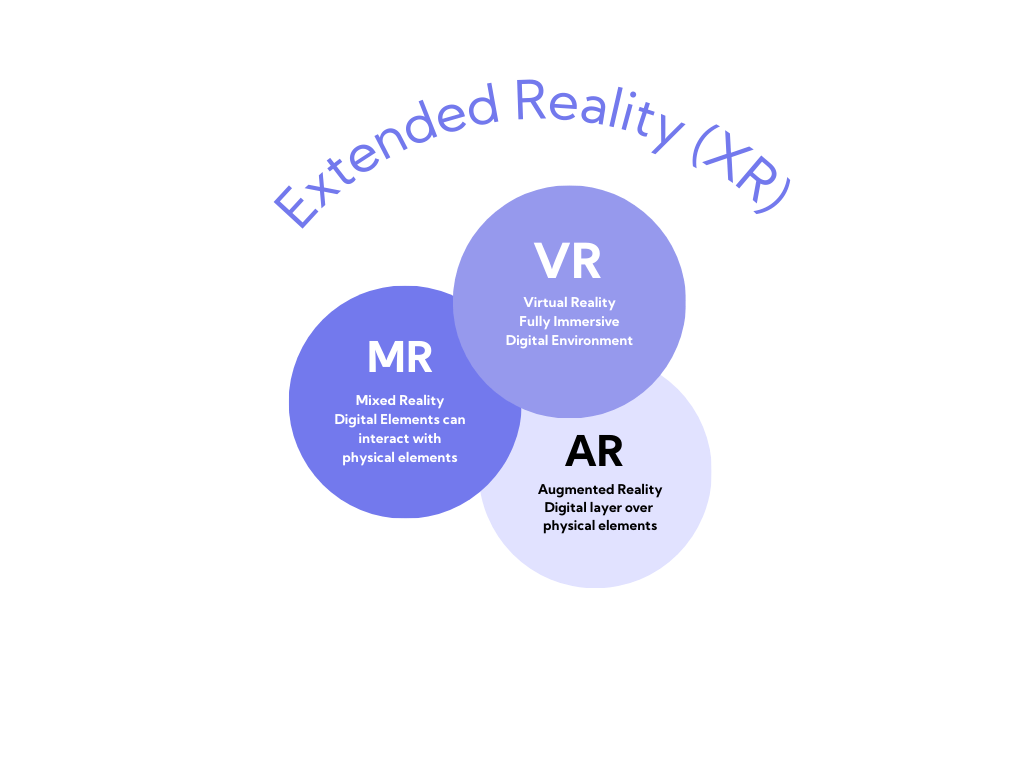
Mixed Reality (MR) technology not only overlays digital elements onto the real world but also enables interactive experiences, allowing users to engage with both digital and physical elements simultaneously. It’s a combination of augmented reality (AR) and virtual reality (VR).
Extended Reality (XR) is a comprehensive term encompassing technologies that blend digital and physical elements, blurring the distinction between reality and digital enhancements. XR modifies reality by integrating digital elements to varying degrees, bridging the gap between the physical and digital realms.
Virtual Reality (VR) creates a fully immersive digital environment, replacing the real world entirely. Users wearing VR headsets are transported to a computer-generated world where they can interact with the surroundings. Augmented Reality (AR), on the other hand, enhances the real world by overlaying digital elements, such as graphics or learning mechanics, onto the user's view of the physical environment.

AR experiences are typically viewed through smartphones, tablets, or AR glasses, allowing users to interact with both the real world and digital objects simultaneously. Mixed Reality (MR) takes AR a step further by enabling interactive experiences where digital objects can interact with the physical environment, creating a seamless blend of real-world and digital elements.
Extended Reality (XR) serves as an umbrella term, encompassing VR, AR, and MR technologies. XR alters reality by integrating digital elements to varying extents, offering a wide range of immersive and interactive experiences across multiple applications and industries.
Of course, this is completely dependent on your organization’s needs and the industry you operate in.
If you’re looking to put your employees through hard skills training or certification, Virtual Reality would be a suitable option. VR enables employees to practice in a risk-free space, making it ideal for training in hazardous environments. Workers can learn to handle dangerous equipment or situations without any real-world consequences.

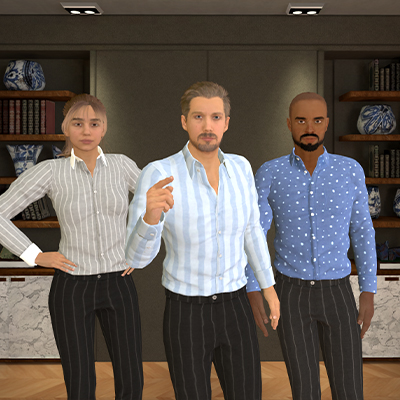
On the other hand, VR is excellent for soft skills training too, allowing learners to practice key skills in a safe space where they can learn from mistakes, and repeat scenarios over and over again. Learners can then receive feedback based on their actions and responses. Learn more about the efficacy of VR for soft skills training here.
Augmented reality is a good tool to use for on-the-job guidance, suitable for assembly tasks, maintenance procedures, or machinery operation - scenarios that are technical in nature and require step by step, real-time guidance. AR is also handy for providing remote assistance to employees in the field. Mixed reality has similar applications, helping reduce production time and improve product quality in product design and development scenarios, as well as providing remote assistance and improving customer experiences in real-time.
At SkillsVR, we transform learning into an engaging and enjoyable experience. Our VR training solutions are cost-effective, easy to implement, and scalable to meet your needs. Backed by a team of world-leading experts in immersive learning, we're dedicated to ensuring exceptional training outcomes to elevate your organization’s potential. Join us in unlocking the future of training and achieving impactful results.