Bring clarity, capability, and
consistency to your workforce.

Traditional training programs can lack strategic focus. They often fail to address essential skills for immediate business needs, and are typically delivered in long, uninspiring sessions. This doesn't work well - it just leads to wasted resources, low employee engagement, and undertrained teams. So, why do companies use VR instead?

Learning effectiveness directly impacts employee performance and organizational success. While U.S. companies invest $200 billion annually in corporate training, only 10% of that results in tangible outcomes. Immersive learning, especially through virtual reality (VR), engages learners more effectively, leading to better retention and application of knowledge.
VR training boosts learning effectiveness by 76% compared to traditional methods.
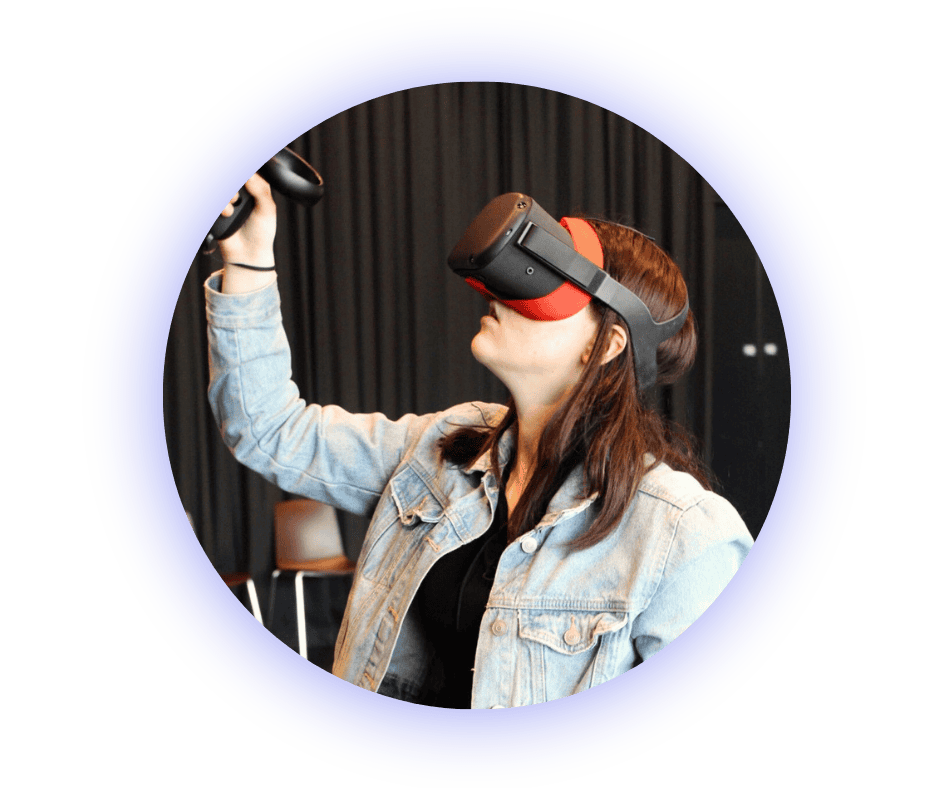
One study found a 250% improvement in student’s ability to accurately complete a safety procedure.
Fast and cost-efficient training maximizes returns on investment. When training is quicker, employees can apply new skills sooner, leading to increased productivity. For example, Walmart reported an incredible 80% savings in training time by using VR to prepare managers for Black Friday.
VR training can be up to four times faster than traditional classroom training.

At 375 learners, VR training achieves cost parity with classroom learning. At 3,000, VR costs become 52% less than classroom learning.
Engaged employees are more productive and contribute to a positive work culture. In fact, 92% of workers believe workplace training positively impacts their job engagement. Immersive learning experiences enhance connection to the material, increasing retention and application.
85% of learners prefer VR over traditional methods.

VR learners felt 3.75 times more emotionally connected to the content than classroom learners.
With improved engagement, speed, and cost-efficiency, VR and other immersive technologies are revolutionizing employee training and development, making learning more impactful and aligned with business needs, all while providing learners with an enjoyable and memorable experience.
Ready for impactful training in 2025?
You might also like...