Bring clarity, capability, and
consistency to your workforce.

Think of a typical classroom training session: a group of employees gathered in a rented space, with an instructor leading the session, maybe even flying in team members from different locations. The costs quickly add up: physical space, travel expenses, instructor fees, and material production. On average, companies in the US spent about $1,207 per employee on training in 2023.

But cost isn’t the only drawback. Studies show that traditional training methods, especially those relying heavily on lectures and presentations, lead to limited retention. In fact, after just a few days, learners remember only a small percentage of what they’ve been taught. This means that the investment in time, money, and effort may not translate into the long-term results businesses are hoping for.
Virtual Reality (VR) training offers a different approach. Teams wearing VR headsets and being immersed in realistic, interactive environments. They can operate heavy machinery, perform intricate medical procedures, or practice safety protocols - all in a risk-free, controlled setting.
While the initial investment in VR hardware and software can seem steep, it quickly pays off. Once a VR training module is developed, there are minimal ongoing costs. There’s no need for travel expenses, renting training spaces, or hiring instructors repeatedly. A VR training module can be reused for thousands of employees, with no additional cost for each new session. This scalability is something traditional methods simply can’t match. For example, our customer Brian Perry Civil saves around $55,000 per year in lost time through training their team with the SkillsVR Site Safe Virtual Reality experience.

Compared to many tech investments, VR hardware is relatively affordable. High-quality headsets like the Quest 2, Quest 3, and Pico 4 now cost between $260 and $570, making the entry price more manageable for most companies, and even cheaper than the average iPhone.
VR training doesn’t just save money, it’s also more effective. Studies show that learners retain 75% more information when immersed in a virtual environment compared to traditional methods. This increased retention comes from the active, hands-on nature of VR learning. Employees are fully engaged, practicing tasks in a way that feels real but without the real-world risks. The ability to "learn by doing" makes the experience far more impactful.

Once a VR training program is developed, it can be deployed anywhere, anytime. There’s no need to coordinate schedules or wait for availability of instructors or facilities. VR modules can be easily updated or modified without significant additional costs. For example, a company could quickly rebrand the content, tweak scenarios, or scale up training across global offices with minimal effort.
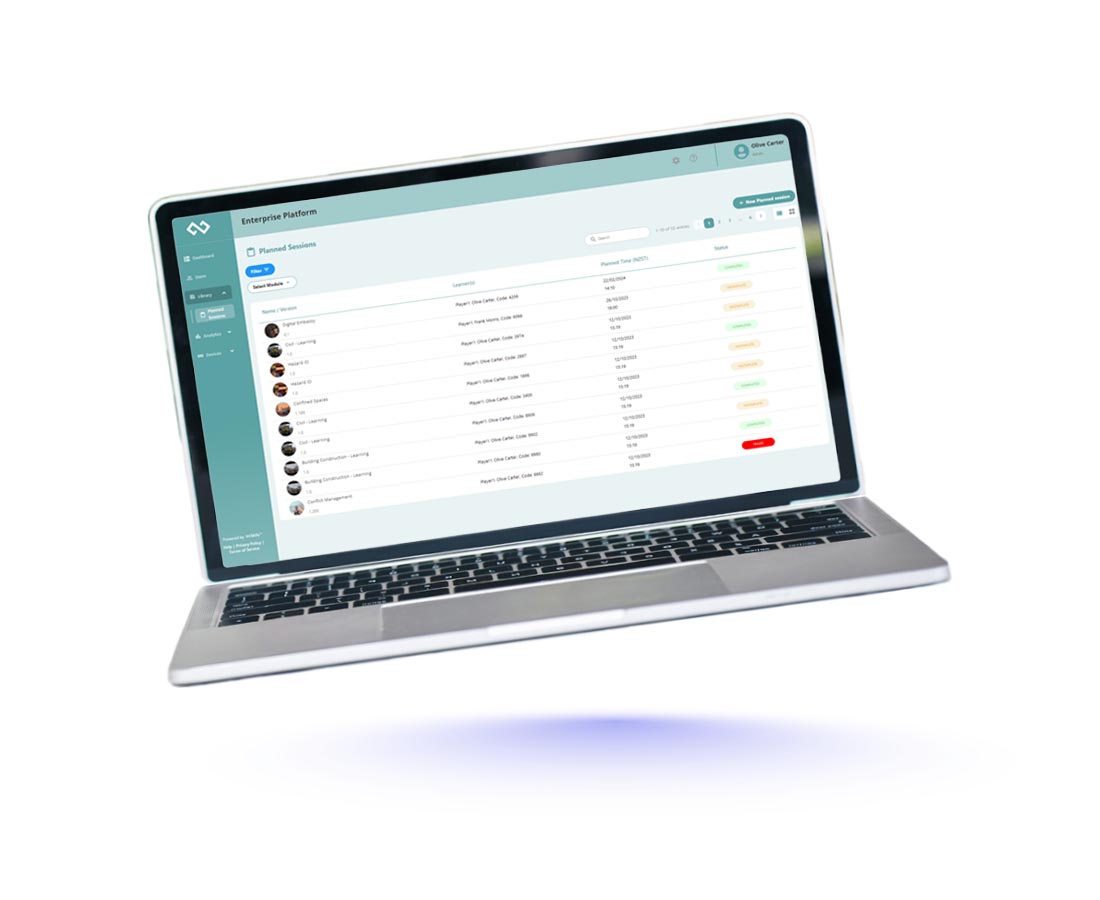
With SkillsVR, our customers are able to track and assess learners across the world, at any time, through the Enterprise Platform. Additionally, the CCK allows managers to quickly update training content when needed, and easily deploy at scale.
VR training has been shown to speed up the learning process. Since learners are more engaged and learning by doing, they tend to grasp concepts faster and retain the information longer. This means less time spent on training sessions, which translates to quicker onboarding and skill development. Employees can get back to their roles faster, and businesses save time and money in the process.

(PWC Soft Skills VR Training Efficacy Study 2020)
The true power of VR training lies in its scalability. While developing a VR module may initially cost more than traditional classroom or e-learning courses, the ROI grows significantly as more employees are trained. For example, at around 375 learners, VR training reaches cost parity with classroom learning. By the time you reach 3,000 learners, VR training becomes over 50% more cost-effective than classroom sessions. The larger your organization, the greater your savings, particularly when factoring in the reduced need for facilitators, travel, and downtime.

For companies looking to innovate their training programs while keeping an eye on cost-efficiency, VR training offers a compelling solution. Not only does it slash traditional training expenses, but it also delivers superior learning outcomes, greater scalability, and faster training times. As the technology becomes more accessible and affordable, now is the time to invest in VR training.
At SkillsVR, we transform learning into an engaging and enjoyable experience. Our VR training solutions are cost-effective, easy to implement, and scalable to meet your needs. Backed by a team of world-leading experts in immersive learning, we're dedicated to ensuring exceptional training outcomes to elevate your organization’s potential. Join us in unlocking the future of training and achieving impactful results.